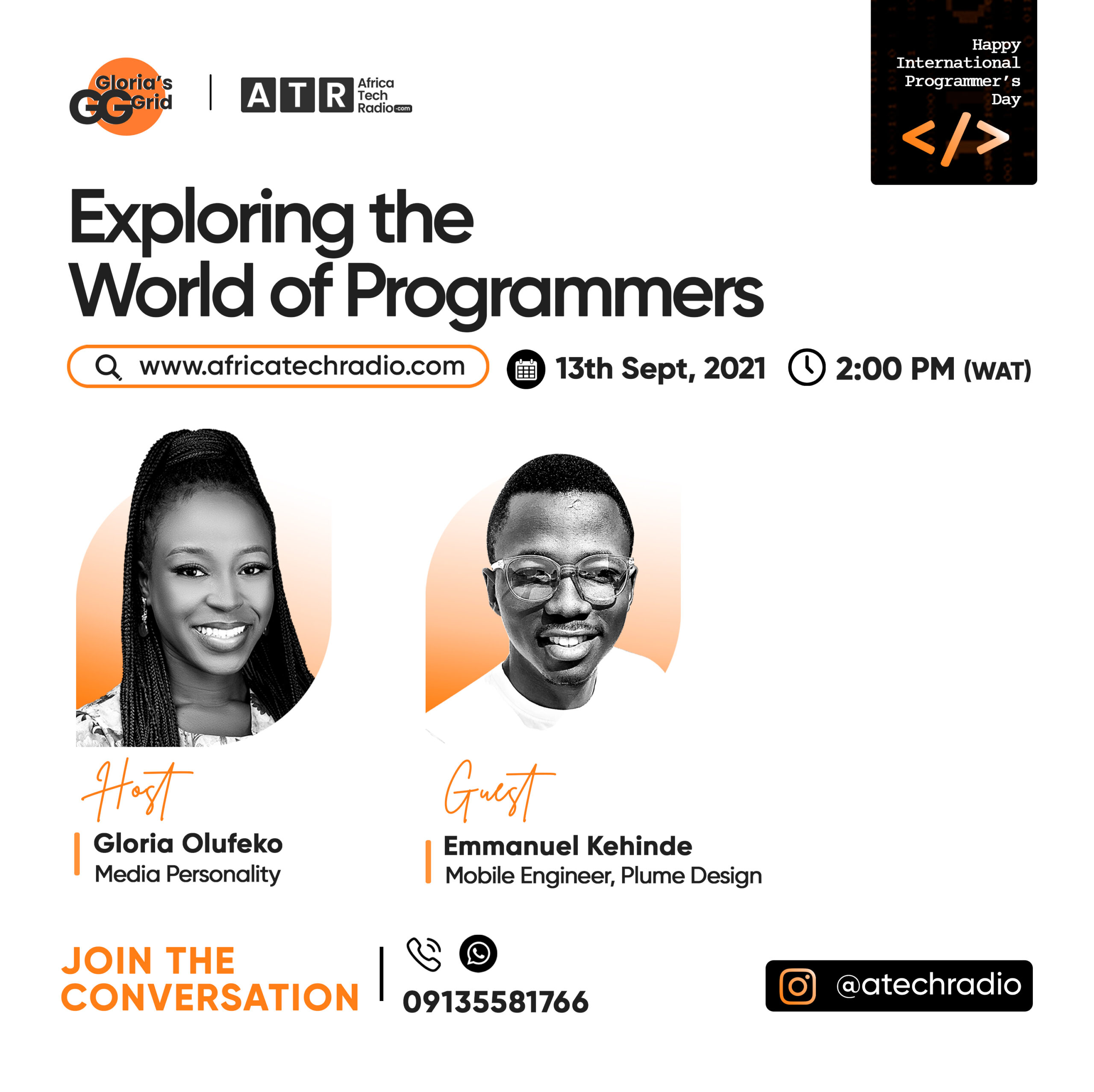
Radio interview · Africa Tech Radio · 2021
Exploring the World of Programmers
It's World Programmers Day, a day specifically chosen as the 256th day of the year: 2 raised to the power of 8, the number of distinct values a byte can represent, and also the highest power of two less than 365. At Africa Tech Radio, I joined host Gloria Olufeko to talk about Programmers Day, what coding is, how it differs from programming, and how to start a career in programming.
Below is a transcript excerpt of that on-air conversation.
Transcript
Gloria: Let's start with why today, September 13th, has been chosen as Programmer's Day: the number 256 is distinct for programmers. Explain the logic behind 256 and why it matters.
Emmanuel: 256 (2 raised to power 8) is the number of distinct values a byte (8 bits) can represent, a value well known to programmers. It's also the highest power of two less than 365, the number of days in a year.
Gloria: Many people refer to programming as coding. If you 'code', does that make you a programmer? Is coding the same as programming?
Emmanuel: Coding is part of programming: writing code a machine can translate. Programming is the process of creating a program that follows certain standards and performs a task.
Gloria: For a beginner, what actually goes on in the world of programming?
Emmanuel: Programming is developing an executable program without errors, and the programmer's job is to analyze a problem and provide solutions. Building an application means planning it, designing it, testing its features, deploying it, and maintaining it after it's finished.
Gloria: How well are Nigerians and Africans opening up to this side of technology?
Emmanuel: We're opening up a lot. Programming used to feel like something only a few 'talented' people did, something you needed a Computer Science degree for. That's changed: it's more lucrative, doable from home, backed by free resources, and there's more awareness overall.
Gloria: For someone with no computer science background who wants to start a career in programming, where do they begin?
Emmanuel: Research the career paths, the skills and jobs out there, and find what interests you. Find a mentor. Learn the right languages. Keep learning while building a portfolio. Apply for jobs early, even before you feel ready.